OpenAI Chat Completions
Enable search directly on the request body.
OpenAI Responses
Add search as a tool, with optional allow-list filters.
Anthropic Messages
Add search as a tool, with allow and block lists plus location.
Enable web search
Any account
Turn on web search under Account → Web tools in the console. Once on, pick the surface above and send requests using its native web-search shape. Per-request domain filters (where the surface supports them) pass through unchanged.Project settings
You can also set per-project domain ceilings. Under Project → Web tools, setallowed_domains and/or blocked_domains on a project and they apply to every request made with that project’s key.
These lists live on the project (not the policy).
How ceilings merge with per-request filters
When both a project ceiling and a per-request filter are set:- Allow lists are intersected. The request’s allow list must be a subset of the project’s. Asking for a domain outside the project list returns
400. - Block lists are unioned. Project blocks always apply; request blocks (where the surface supports them) apply on top.
- OpenAI Chat Completions has no per-request allow or block field — the project ceiling is the only domain control.
- OpenAI Responses sends
include_domains(allow) only — block comes from the project. - Anthropic Messages sends both
allowed_domainsandblocked_domains.
In practice
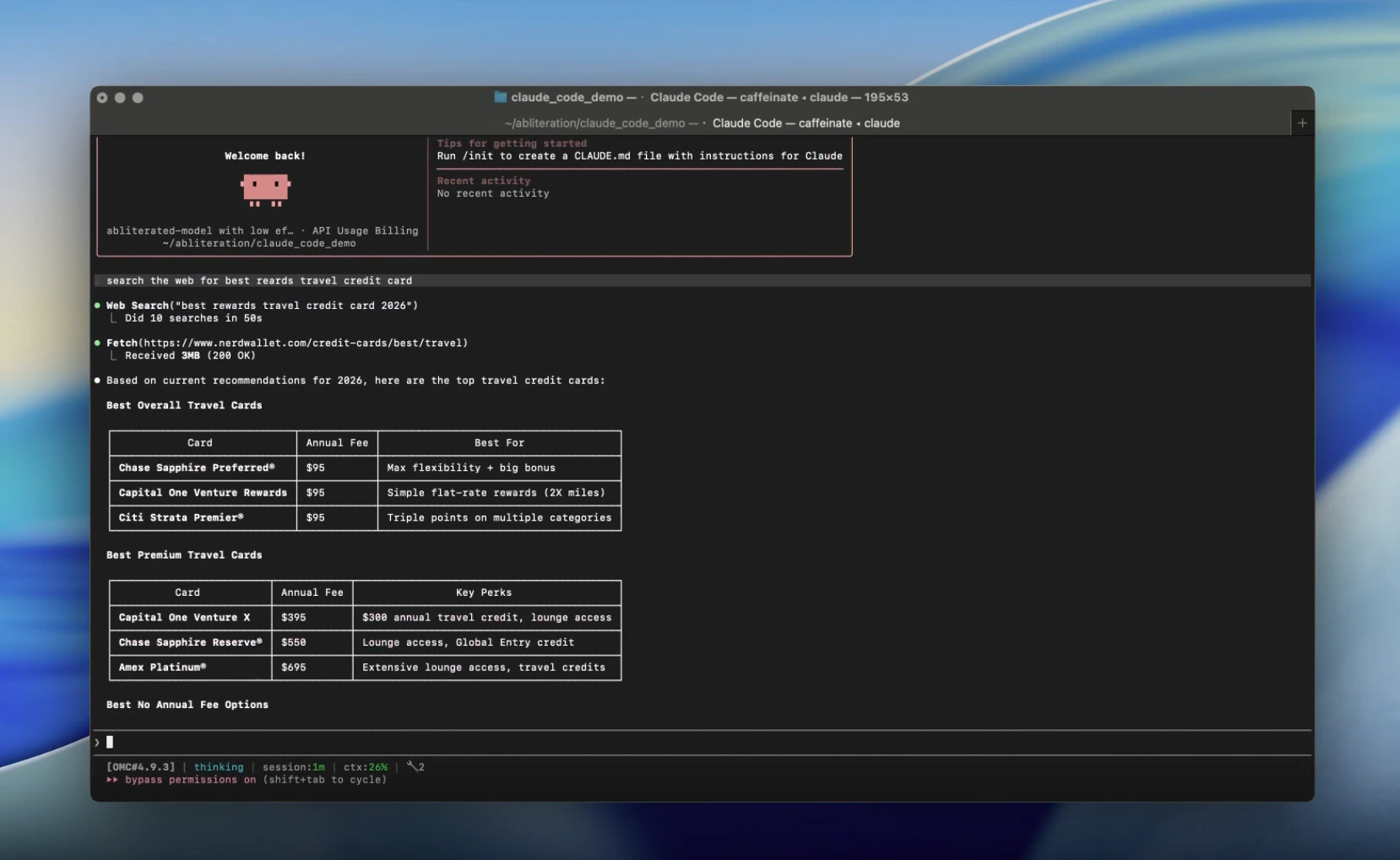
Web search works inside any client that talks to abliteration.ai.Codex CLI
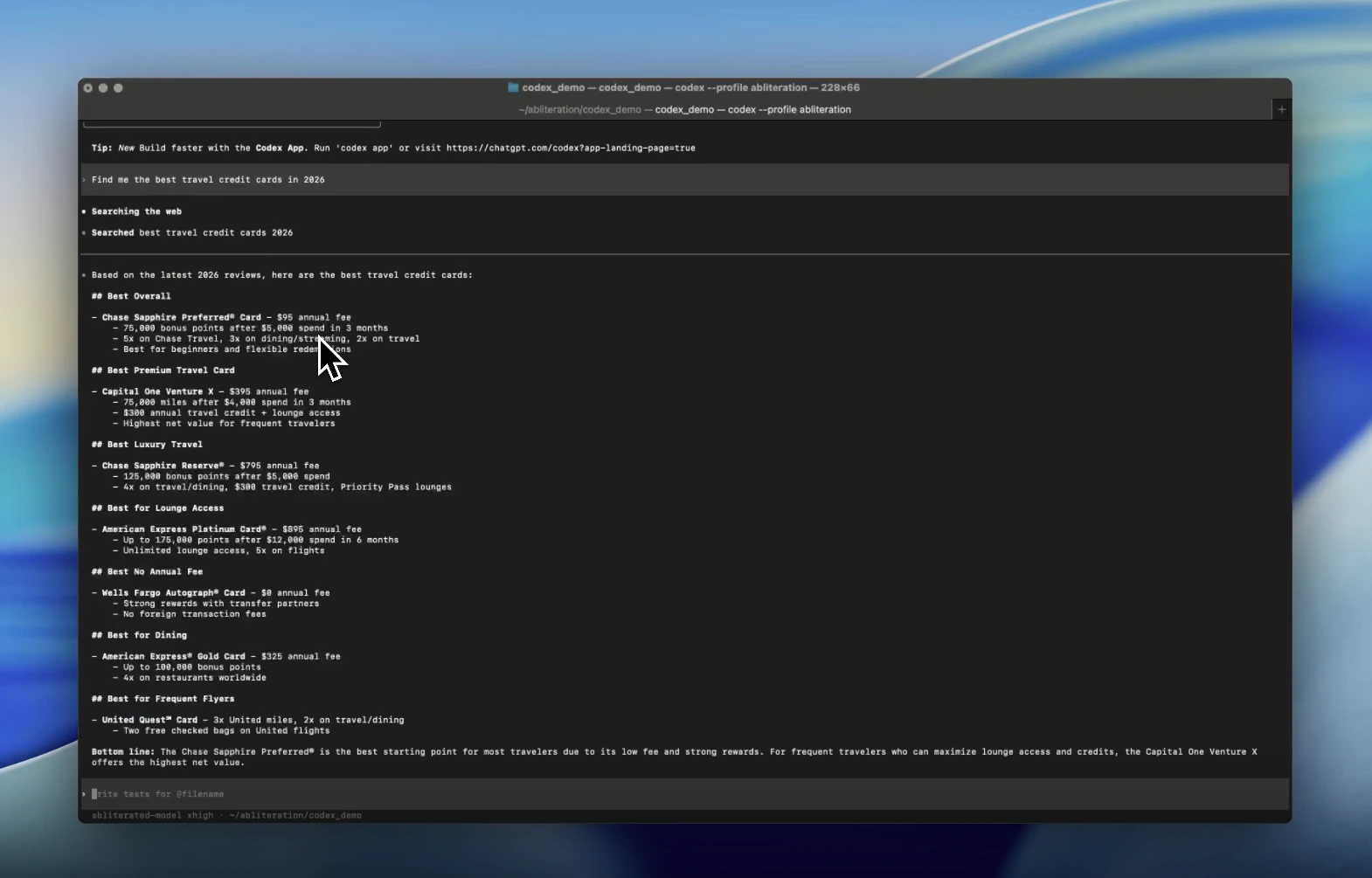
web_search = "live" to the abliteration profile in ~/.codex/config.toml. Full setup → Codex integration.
Claude Code